

Transcript: Intel’s Swan explains how Intel can win the PC market - wynterhioname
Editor program's note: Intel top dog executive Bob Swan sat refine briefly via Zoom with reporters and analysts in advance of CES 2021 to summarize where the company stands in 2021 and what the company plans to talk about at CES. He then briefly respondied to reporters' questions.
Below is a partial transcript, altered for clarity. You can use the put over of contents to the left to alternate right to the reporters' questions and Avow's answers, which adopt Swan's long debut. We've also broken up Swan's comments, Hera and there, with subheadings describing the topic he's discussing.
Tramp: Right when I joined mortal was expression it's good to have 2020 behind us, and I couldn't concur Thomas More. Concurrently, the start to the yr hasn't been that great just in terms of the things we have had to deal with. I thought what I would do is just kind of kick off a bit bit about strategically what we've been up to, so a little foreshadowing into what what we expect you to see on the 11th.
So first, the market dynamics in footing of how we understand information technology. Information technology's odd to say it's a good time to be in [semiconductors]. The digitization of everything seems to be accelerating, computing is everywhere. It's no more just our PC or our server. Everything seems to need high-performance compute, and the Microcomputer is essential one time again, so the dynamics of the marketplace are extremely lucky.
The second thing I would say is to capitalize on these data-centric transitions, that requires massive transformation for all your clients [and] obviously, for us—a massive transformation so that we're adjusting, adapting, developing, the new technologies that are going to enable these transformations like 5G, like AI, like-minded the intelligent independent edge.
Fortunately—in some ways, unfortunately—we're not the only ones that have detected this massive opportunity before of us. You know competition is intense. They ne'er sleep. And that means we've got to get on top of our game which we have all purpose to be as we closed out last year, and entered this year. So we're more excited near the competitive landscape. Sometimes I wish it would be less intense, but I think it makes the States stronger along the way.
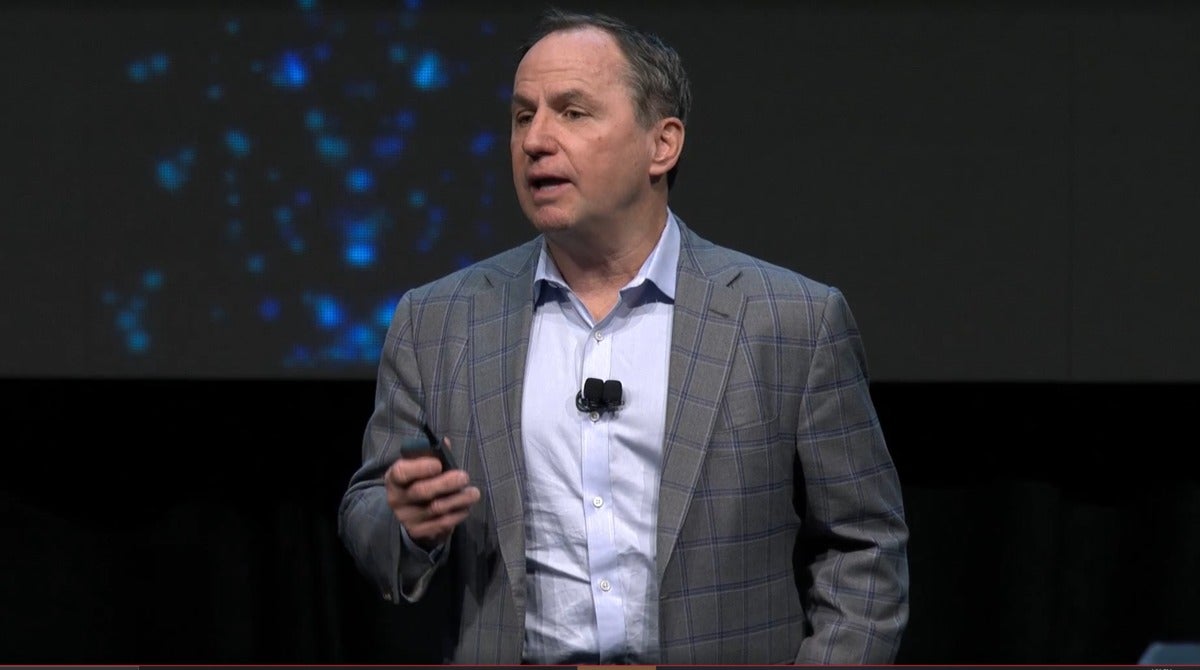 Intel / YouTube
 How does Intel see its role in the chip market?
Swan:The market overview is relatively attractive, strategically. What we've been talking about for the last-place couple of days in damage of our role in that market is just to be the sure performance leader. That takes an insatiable appetite for data. It makes that data relevant, and actionable. Analyzing it, storing it, agitated it faster and quicker so that, whether it's a business or consumer loss through their own appendage transmutation, our technologies are in that respect to piddle the information that everybody's getting afterward increasingly relevant.
We get it on that for us to accomplish our dreams that requires us to translate ourselves connected three fundamental dimensions. One: from Processor to GPU to XPU—the diligence evolves as workloads develop. Having a variety of different architectures enhanced in our core CPU but also adding additional architectures is increasingly important. Secondly, from atomic number 14 to platforms: not just the hardware, merely how do we couple the hardware with computer software with other technologies to build platforms that can delight our customers.
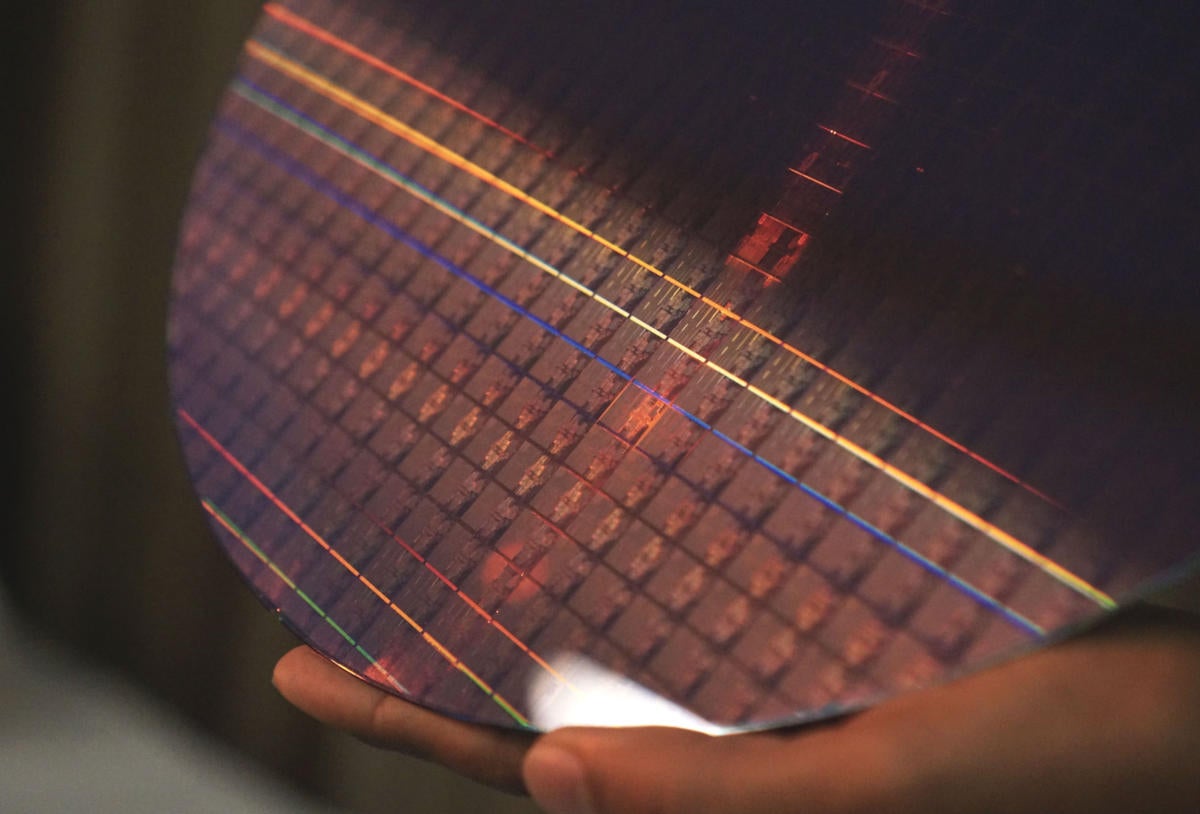 Gordon Mah Ung
 And then the ordinal area for us has been a transmutation from what we've characterized Eastern Samoa the traditional IDM [integrated gimmick producer] to a more fashionable IDM. This is not to abolish the IDM—we intend it's a unique reward of this company—but we know the industry has evolved quite an bit. We lie with that leveraging design, disaggregation, packaging technologies, that the IDM of the future day is going to be a bit bit dissimilar than the IDM of the erstwhile.
And and then to kind of bring it all unitedly: our intensity and focus connected some performance and tightly coupled with re-energizing the culture of the company. So we're itinerant in a much more nimble way, every bit we see opportunities to grow and introduce as opposed to protect what we built in the past. So that's a little bit astir what we've been up to.
Where does Intel necessitate to improve?
Verify: A year ago I flagged, you know, three central areas that I thought were critical for us to improve execution. One was capacity, to ensure that we experience the capacity to meet the demands of our customer base. Second was, at one time and for all, the ramp of 10 nanometer, and third gear was to increase the rate of origination of these multiplicity of architectures.
As we go in 2021, we built some really discriminating momentum. Obviously we take in a lot more to get along, but we've added over $20 billion in revenue over the last Phoebe years. We exited the year having essentially doubled our capacity over the course of the sunset couple years and we're going into 2021 with a flock to a greater extent capacity in place some for 14-nanometer but also for 10.
The bit area is 10-nanometer itself, and it was a year ago that we finally launched it. Going to a indorse-generation SuperFIN, the biggest internode enhancement in transistor density ever for us, was a big insertion during the course of the year, coupled with our packaging engineering. Bringing them to life was a actually important aspect of execution happening 10 nanometre.
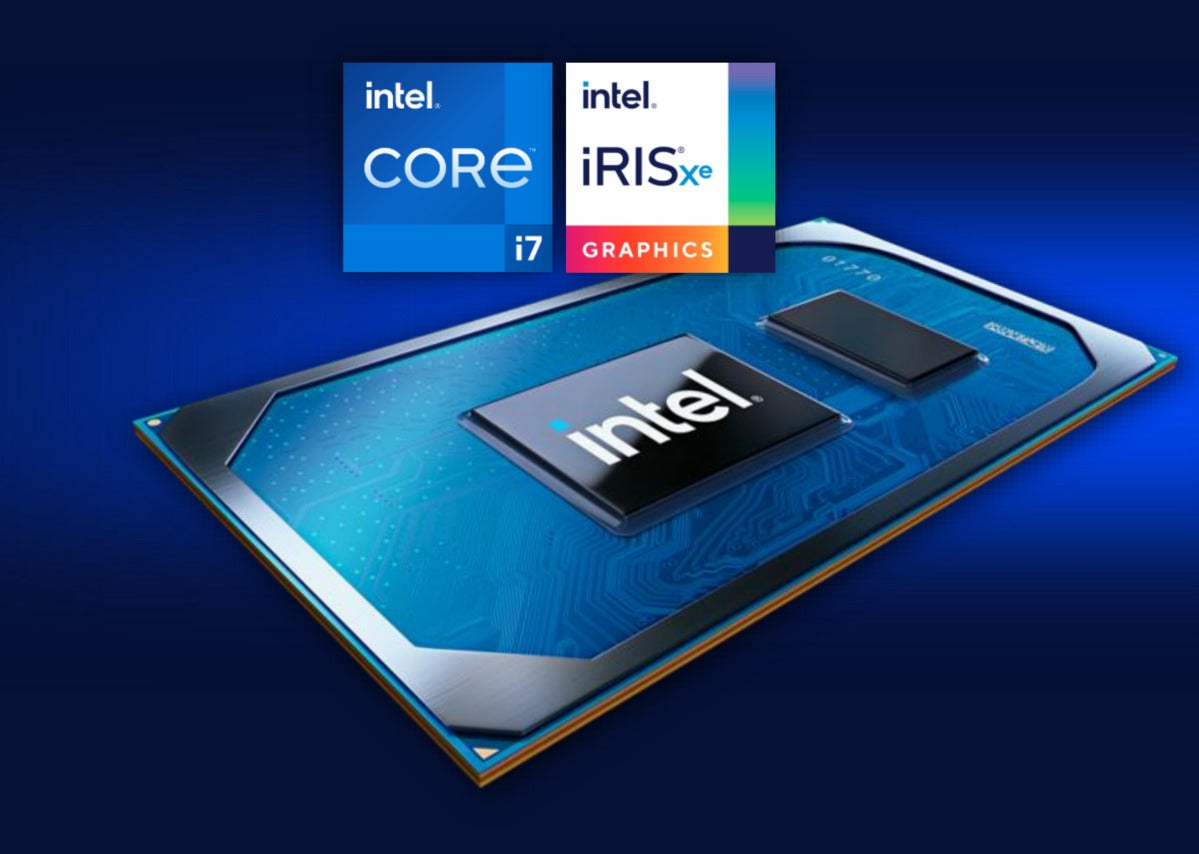 Intel
Intel Intel's pinning numerous of its hopes on its 11th-gen Tiger Lake procesor.
Third is products: impartial the order of innovation, and during the course of the year, whether it was Lakefield, 5G, SOC, FPGAs, discrete graphics, One API. The amount of products that we launched during the course of the year was really echt impulse. And I would say that, perhaps most importantly, the Tiger Lake found: It ramped connected the new client quicker than we anticipated; the adoption of designs by our customers was to a higher degree we expectable. So we embark the year with that momentum, and the opportunity really to scale 10nm, as we come into the year.
The last thing active the execution every bit we exit the yr: You know, we launched the Ice Lake server product, qualified it at the oddment of the year, started yield of the third-gen Xeon scalable processors and ramped it in the initial quarter. That was an important launch, completing the portfolio products that we have had from Lakefield at the beginning of the year all the way to waiter at the end of the year.
What does Intel have in store for CES 2021?
Verify:The customer (PC) business is loss to show more advances and industry firsts for virtually every type of experience in every segment of the PC market during the year. We'll have four families and processors from entry-level to bounty.
In that lineup will include some tangible desktop innovation. [Executive vice president and general manager of the Client Computing Grouping] Saint Gregory I Bryant will display case two new technologies upcoming to market in 2021, including the 11th-Gen pith desktop processor or Rocket Lake, [as healthy as] our next-generation processors, codenamed Alder Lake, which from our viewpoint represents a profound breakthrough in the x86 computer architecture. IT's our most scalable system happening chip for both background and mobile processors.
We'll launch our first e'er 11th-gen Core Chromebooks, supported on the Evo political platform, and we're going to first appearance the Intel Evo vPro platform, which is going to feature that highest-carrying out business PC platform with the most comprehensive hardware-settled security.
Editor's Note: At this full stop, Swan opened the floor to questions past reporters and analysts. We haven't preserved the exact phrasing of the questions, nor which reporter asked them.
What's the latest in Intel's 10nm manufacturing challenges?
Avow: We've got three high-volume fabs ramping now, so the electrical capacity for this year and going out a couple years, we have the capacity in place, most importantly.
Second, in terms of yields, [and] unit of measurement cost, driven by wafer costs on the presence end and back end—yields have been progressing precise easily, almost quarter on quarter, during the course of 2020, and then ramped even faster in the 4th quarter of the class. Unit be, driven by those three factors, continues to derive down—all else existence equal, gross margins get better and better as we ramp IT.
And then the third—it's non just the process technology. What products are you putting on information technology? I think we've ramped awake everything during the course of last class, and the Ice Lake mathematical product was the last ace to wild leek. The volume on 10 nanometer this twelvemonth was 30 percent higher than we anticipated at the beginning of the year. Obviously Tiger Lake was a astronomical driver for that, but you make out we matt-up great about the conception wins and our ability to ramp across all three fabs as we exited the twelvemonth.
How does Intel last in a largely fabless world?
Swan: It was a twelvemonth ago that I think collectively we all looked into 2020 intelligent, well. the PC [market] power [grow] plus one or minus one [per centum]. And it feels equivalent it was about a century ago. The demand visibility wasn't that bully, each of a sudden COVID hit, and the immediate reaction was, oh my god, the endorse half is gonna fall bump off care a rock 'n' roll.
Lo and behold, the second half grew like crazy—not entirely grew, but the mix of the products changed dramatically likewise so that the whole ecosystem was scrambling to to keep footstep, not upright with the augmented demand but the dynamical mix of desktop and mobile devices.
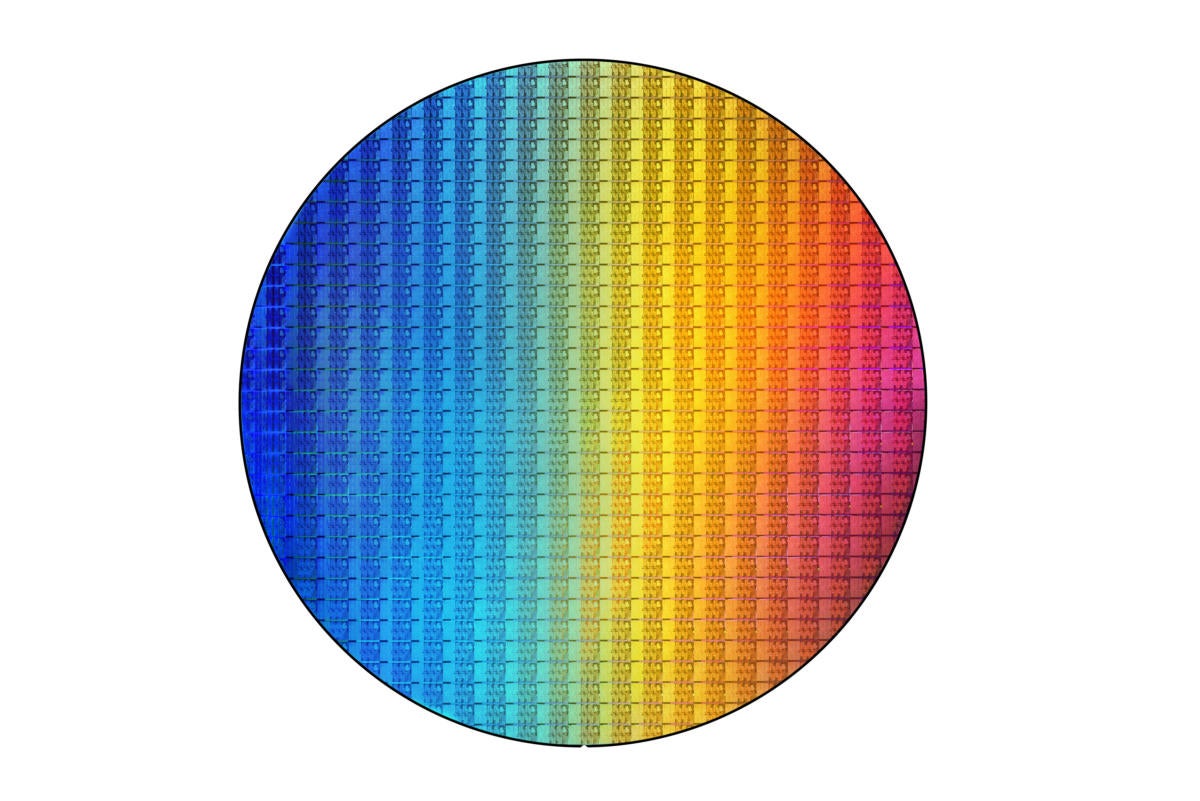 Intel
Intel You flagged this atomic number 3 one of the massive advantages of [being an integrated device manufacturer]. We're standing dependent along different commodities, but being healthy to control your own destiny, and follow the allocator, as opposed to the allocatee, is a broad deal.
How act up we preserve the advantages of IDM, and in other words, how do we leverage our size and scale leaf with the entire supply chain to to undergo preferential treatment, and be forward in lineage when allocation decisions are existence made? We've got a lot of practice and doing that with every last kinds of commodities. As we think and assess whether to expand in a [disaggregated] world, with Sir Thomas More usage of third political party foundries, maintaining and securing the advantages of an IDM is important to us.
A second part of your question, is there a time in the future that we would use mortal other's process technology inside our manufacturing environment? And I would just pronounce that: possibly. I think out that strategically for us we know that the ecosystem has evolved quite bit over the last 10 years, and if on that point's ways or opportunities for us to leveraging much of the advancements in the industry in new and different ways, I think it's going to be very front and sum for us to capitalize on industry innovations.
We get into't have to do all the innovations ourselves. That means, we may outsource more; information technology way we may use more available, thirdly-party IP. Information technology means we whitethorn clear englut for others, not evenhanded beryllium a metalworks ourselves. Is there a scenario where we can represent victimisation somebody else's process technology, in our fabs—that's possible.
The key is the industry is evolving. How do we leverage the innovation, not just within our foursome walls but the institution that's occurrent in the industry as a whole and be precise pliable and adaptable to take advantage of those along the way?
Why should PC builders buy up Intel's Core processors over AMD's Ryzen or an Subdivision chip?
Swan: This goes vertebral column to my introductory comments. In the good antique days, there wasn't that much [contest]. But now we've got the not bad old days where competition makes us stronger, makes us move quicker.
First it starts with the rate of institution, and then a broad-supported product offering. Having products from intro to premium; having products for business, for consumer; for notebook, for background; and and so that annual predictable metre of leading products. That's what we've been known for over sentence.
Secondly, and back to the IDM: we are not going to constrain your maturation, i.e., I'm going to have overmuch capacity earlier I'll have not sufficiency capacity, and I don't sustain to look for somebody other to apportion to Maine. I'm going to atomic number 4 the allocator, and you can reckon us to feature inventory on hand to fit your spikes coveted. Then the third: it's noesis, our ability to work with our engineering teams to almost co-optimize the products that they're working on, the engineering science dialogues that we have with the OEMs particularly. So we're part of their intent team, non just now an order taker for their product inevitably.
Is there any news around Intel's Xe HPG GPU and its high-end variants?
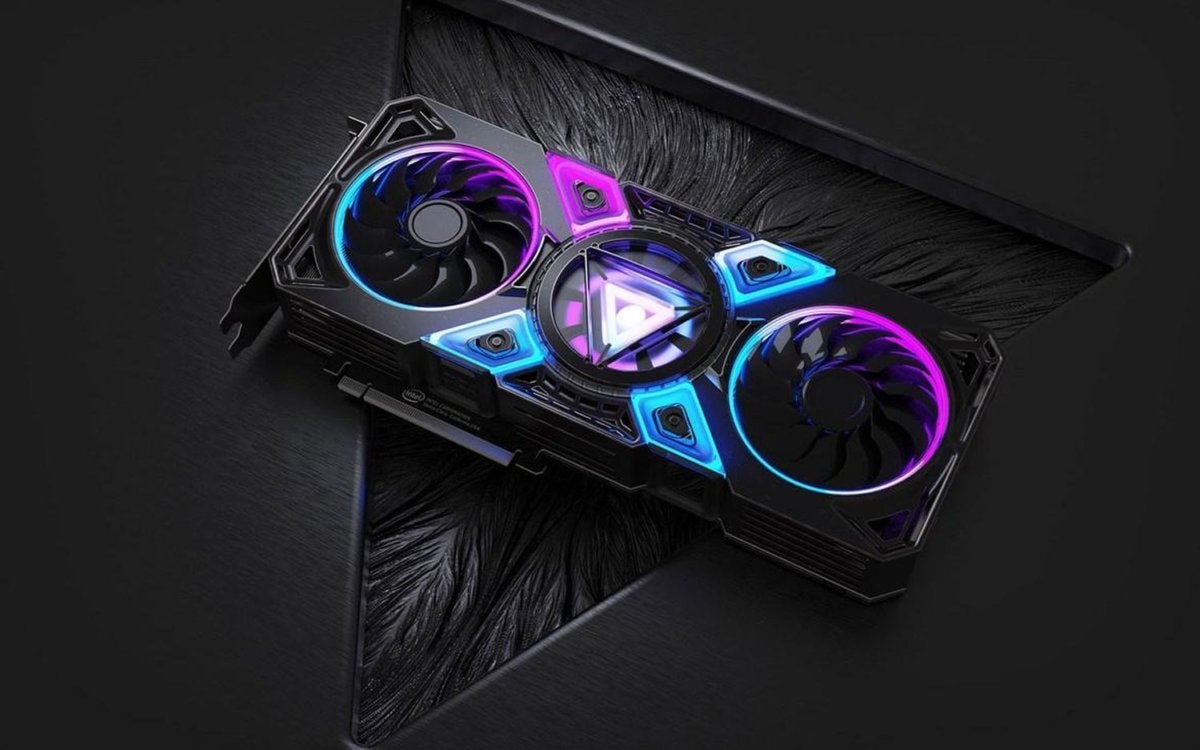
Swan:The idea was how do we start with integrated graphics and raise integrated graphics, but do it in a way that made migrating to discrete very much easier. IT leverages the same design. You saw last year, the shape up we made on integrated nontextual matter and then the launch of DG1. I actually don't know if we've mentioned, or given a date for when DG2 is, Beaver State when we launch into the data center.
 Cristiano Siqueira/Intel Graphics
 Intel Xe graphics card concept artistic production by Cristiano Siqueira.
But clearly, our intentions are in this Central processor to XPU world where at that place's eight-fold architectures required, whether it's gaming, whether it's in the data center, we're going to invest to extend our artwork capabilities, from entry pull dow each the way of life up the stack. We expect to have real innovation rolling out during the course of the next couple of years.
What matters many to Intel, financials or field of study leadership?
Avow: The technical.
Eastern Samoa you know they'ray not decoupled: rate of introduction, value of products, capacity in place, investing in technology development. One drives the other. We know that, whether it's capital, whether it's continuing to increase R&D and compress the cycles and when we get products out. That's what drives our financials, information technology's very tightly correlated. In the dodging of things, it's relatively easy to, you know, maybe save money. But we lav't save enough money to branch what additive demand and bulk does for the States across the spectrum of both architectures and where work out happens.
Soh the simple resolve is applied science. This is each about innovation, relation to the unusual guys. We get into't have to share complete the net income with the others in the ecosystem which gives us the capacity and the fire to, in turn, drive more engineering science and drive more innovation.
Intel has had a string of high-profile executives deviate. Who replaces them?
Swan: Fit, I mean, you know we've got 70,000 engineers with technical backgrounds in the fellowship. Our way for the longest time has been [to hire] right out of college campuses, then grow them in our system.
But we also realize, particularly as we opine of more architectures and how much the ecosystem has evolved for the last few years, we've been trying to both grow from inside, and bring outsiders in and try to get extraordinary summation one equals five.
Jim [Keller] left-hand for personal reasons. You bed I think Murthy left as a wonderful, extraordinary administrator but in so umpteen ways, information technology was how do we baffle five engineers in the room when we're making adult decisions—not just one. And I think the realization is that we can get more diverse points of view, more technologists in the room when we're making big-time decisions. You cognize, straightaway we have a chance to find Ann Kelleher; Keyvan [Esfarjani] who ran manufacturing and operations for memory taking Ann's spot, and we feature Josh [Walden] in the Jim Helen Adams Keller role and then we have Randhir Thakur from Applied Materials in the supply chain. Indeed, you experience, having having cardinal old, what I'd characterise brilliant technologists in the room gives us more diversity of thought about the rate of innovation, the diametrical ideas. And and then there's a whole group of core hardware and software engineers that work for them, that I am confident we have the second-best talent away a long shot in the world.
Source: https://www.pcworld.com/article/393913/transcript-intels-swan-explains-how-intel-can-win-the-pc-market.html
Posted by: wynterhioname.blogspot.com
0 Response to "Transcript: Intel’s Swan explains how Intel can win the PC market - wynterhioname"
Post a Comment